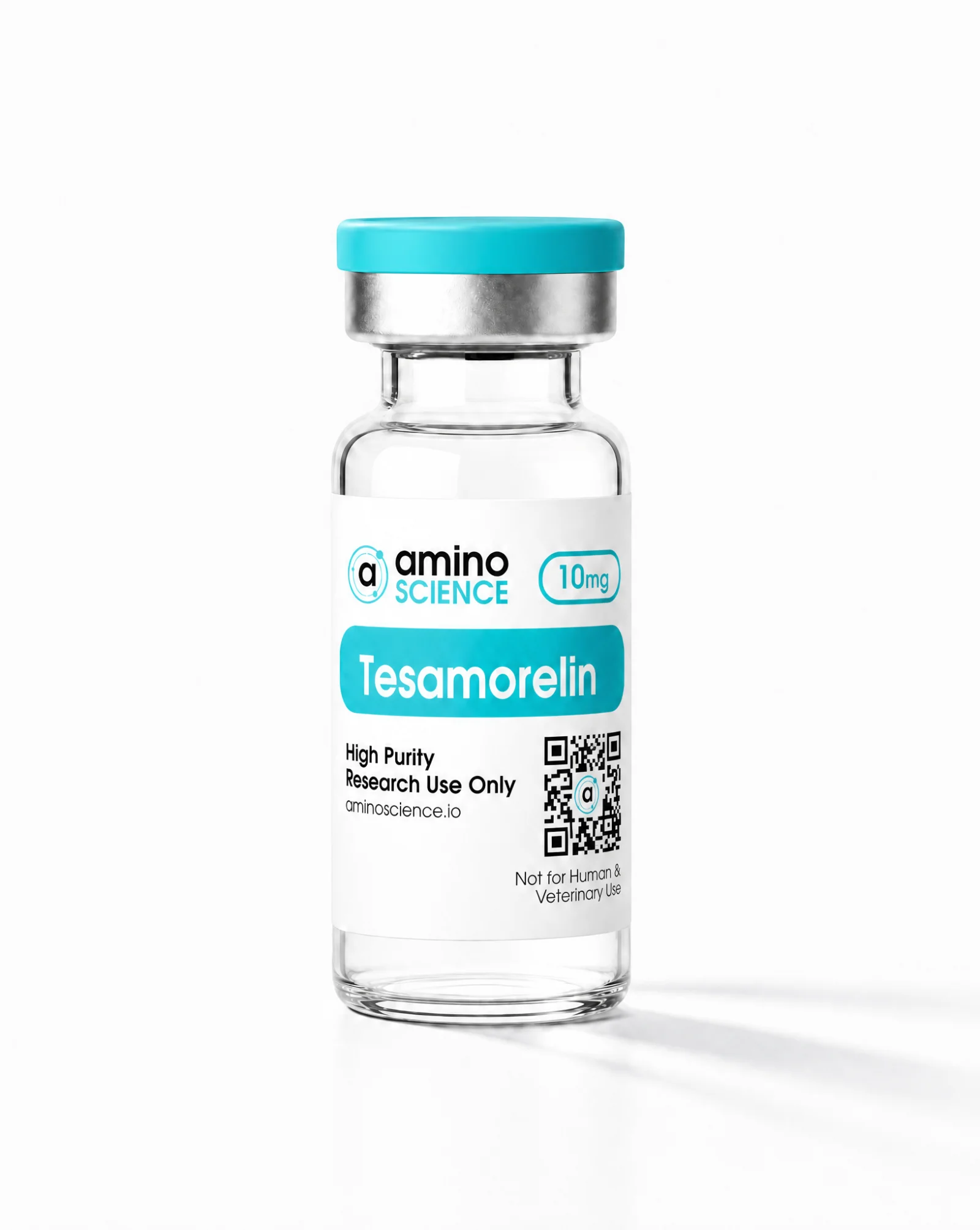
About This Research Material
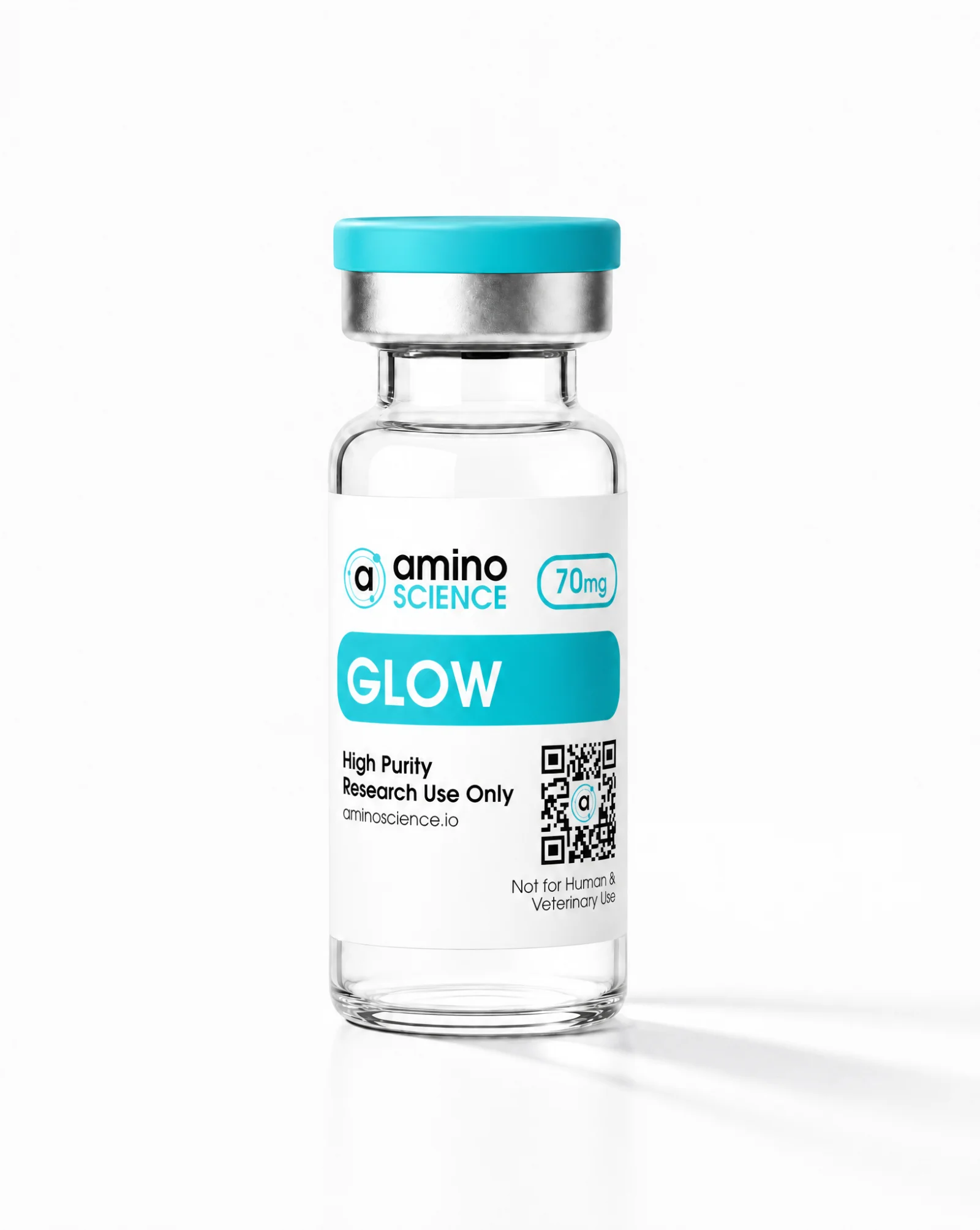
Glow Blend (70mg) is supplied as a single lyophilized research preparation that combines three sequence-defined peptides in one vial: BPC-157 (a synthetic stable gastric pentadecapeptide), TB-500 (the Thymosin Beta-4 sequence, a 43-residue peptide), and GHK-Cu (the copper(II) complex of the tripeptide glycyl-L-histidyl-L-lysine). Rather than three separate vials, the material is manufactured as a co-lyophilized mixture so that laboratories can study the three components together as a defined matrix. The bound copper(II) ion carried by the GHK-Cu fraction gives the freeze-dried solid its characteristic blue tint, which is why the finished powder is described on the certificate of analysis as a blue lyophilized powder rather than the white cake typical of a single metal-free peptide.
This blend is intended strictly for in-vitro and preclinical laboratory work by qualified researchers. It is a research chemical, not a drug, cosmetic, supplement, or food, and is not intended for human or veterinary use. The descriptions below concern the research substance itself — the identity of its three named components, what those components have been studied for in laboratory models, and how the combined material is analytically characterized and handled on the bench. Nothing here is a medical claim, and the research it summarizes is preliminary and ongoing.
The Three Named Components
- BPC-157: a synthetic 15-residue peptide corresponding to a fragment of a gastric protein. In the literature it is described as a stable pentadecapeptide because of its relative resistance to hydrolysis, and it appears frequently as a model peptide in in-vitro cell-migration, angiogenesis-related, and connective-tissue laboratory studies.
- TB-500 (Thymosin Beta-4): a 43-residue peptide that in cell-culture research is studied for its actin-binding, actin-sequestering behavior and its role in cytoskeletal dynamics and cell-motility assays.
- GHK-Cu: a copper-coordinated tripeptide (glycyl-L-histidyl-L-lysine chelating one copper(II) ion) first characterized in the 1970s. Because it carries a redox-active copper center, it is described as a metallopeptide and studied in copper-coordination chemistry and fibroblast/skin-model gene-expression research.
Research Context
The study history summarized for each component derives from isolated-cell, animal-model, and coordination-chemistry investigations. These are hypothesis-generating laboratory observations, not established clinical outcomes, and combining the three peptides in one preparation does not imply any additive or synergistic effect in humans or animals. This content is neutral scientific background, not medical advice or a claim of safety or efficacy.
Analytical Characterization
A multi-component blend is only useful as a research input if each peptide can be independently identified and the overall purity quantified. For Glow Blend (70mg), identity is established by LC-MS (liquid chromatography coupled to mass spectrometry), which resolves and confirms all three species — GHK-Cu, BPC-157, and Thymosin Beta-4 — against their expected masses. Overall purity is determined by reversed-phase HPLC with UV detection: the reference lot documented here reports 99.89% purity, with the chromatogram showing the strongly retained GHK-Cu peak alongside the later-eluting BPC-157 and Thymosin Beta-4 peaks. Because the coordinated copper ion shifts the retention and ionization of the GHK-Cu fraction relative to a metal-free peptide, its identification is documented as the copper complex, not the apo-peptide.
The certificate of analysis (COA) for a blend also reports net content of each component so researchers know the mass ratio they are working with. For the reference lot (AS-GLOW-0426), the COA lists GHK-Cu, BPC-157, and Thymosin Beta-4 as distinct net-content values rather than a single lumped figure. Because purity, counterion, copper stoichiometry, and component ratios can vary slightly between synthesis batches, the lot-specific COA is the definitive analytical record — researchers should reference the COA tied to the lot number received rather than generic specifications, and retain it with experimental records to support traceability and reproducibility.
Laboratory Handling of the Combined Powder
The following describes conventional handling of lyophilized peptide reference material and is not instruction for human or animal use. As a freeze-dried, hygroscopic solid, the blend is kept sealed and protected from light, humidity, and heat, and sealed vials are allowed to equilibrate to room temperature before opening to minimize condensation. Because the GHK-Cu fraction contains a redox-active copper center, exposure to light and oxidizing conditions is minimized and solvent choice is documented per protocol, since some buffer components can interact with the copper. Reconstituted stock is prepared under aseptic technique and aliquoted into single-use portions to limit freeze-thaw cycles that can degrade peptide integrity. Temperature and stability windows for the lyophilized, reconstituted, and working states appear in the storage table elsewhere on this page.