Amino Science Labs sells research peptides exclusively to qualified researchers and laboratories for in vitro and laboratory use. Please confirm before continuing.
By proceeding you affirm the statements above are true. Products are not for human or veterinary use, not for use in diagnostic procedures, and have not been evaluated by the U.S. Food and Drug Administration. Full disclaimer.
Peptide Blends Explained: How Multi-Peptide Research Formulations Work
An encyclopedic look at how multi-peptide research formulations are constructed, characterized, and handled in the laboratory.
July 13, 2026·7 min read
What Is a Peptide Blend?
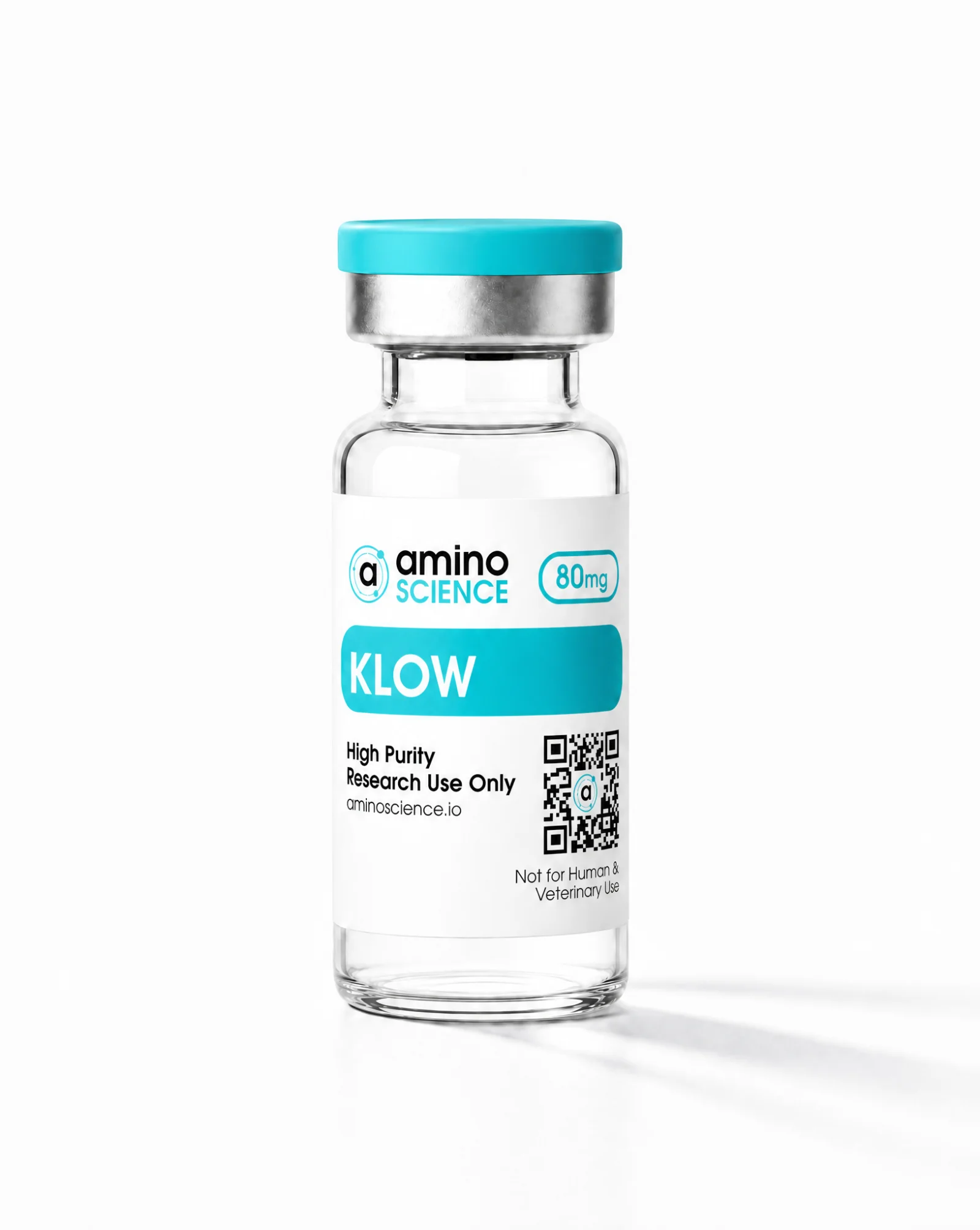
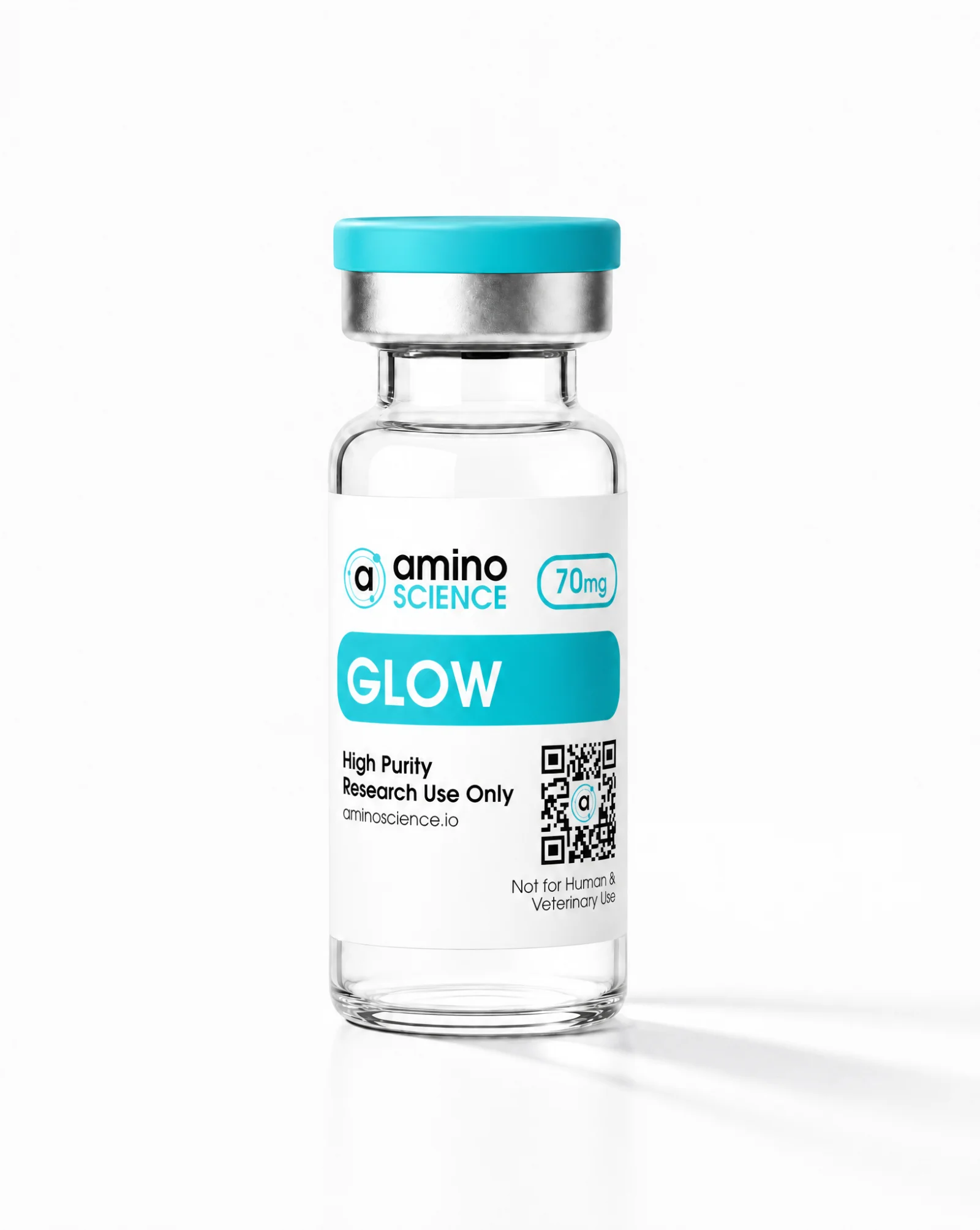
A peptide blend is a single lyophilized (freeze-dried) preparation that combines two or more distinct synthetic peptides in fixed proportions within one vial. Rather than characterizing a single sequence, a multi-peptide research formulation packages several molecules together so that investigators can study them as a defined co-formulated system. In the research-supply market, blends such as GLOW Blend and KLOW Blend are typically described as proprietary combinations, meaning the specific sequences and ratios are set by the manufacturer and reported on the accompanying documentation rather than implied by the product name alone.
Blends are of interest to laboratories because many biological pathways are studied more realistically in research settings when several signaling molecules are present simultaneously. Combining short peptides in a single matrix also standardizes the reconstitution step: one dissolution event yields a solution containing all components at their intended relative concentrations, reducing pipetting variability compared with mixing separate stock solutions. This article surveys how such formulations are constructed, what has been examined in preclinical and in-vitro settings, and how lyophilized blend material is handled as laboratory research material. It is educational and encyclopedic in nature and is not medical advice.
Research Background
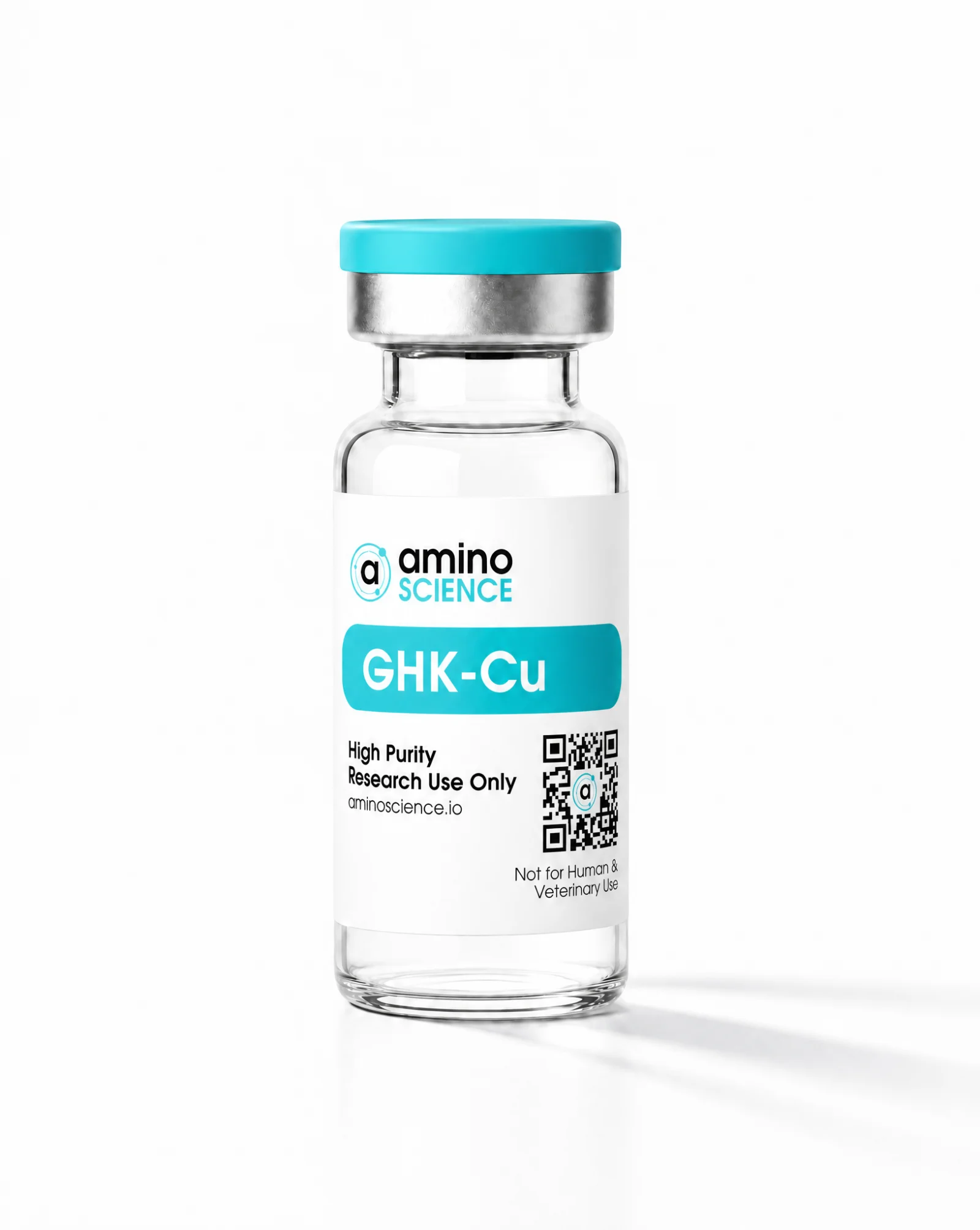
Interest in short synthetic peptides grew out of decades of work on endogenous signaling fragments, tissue-derived peptides, and copper-binding tripeptides. Individual research peptides such as GHK-Cu, a copper complex of the tripeptide glycyl-L-histidyl-L-lysine, and various regenerative sequences have each been characterized separately in the scientific literature. The blend concept extends that groundwork by asking a different question that researchers investigate: when co-formulated, how do multiple peptides behave in the same solution, on the same cells, or in the same preclinical model?
Skin-oriented research formulations are a common blend category because dermal and connective-tissue biology involves overlapping pathways studied in cell culture: extracellular matrix turnover, fibroblast signaling, and modulation of inflammatory mediators. Copper-peptide chemistry, exemplified by GHK-Cu, has been studied in research settings for its interactions with matrix remodeling in cell-culture models, which is one reason copper tripeptides frequently appear as a component in research blends oriented toward dermatological investigation. It is important to stress that co-formulation does not, by itself, establish any combined effect; demonstrating additivity, synergy, or interference requires dedicated controlled experiments comparing each component alone against the mixture.
Mechanism at a Laboratory Level
Each peptide in a blend retains its own molecular identity in solution. When a blend is dissolved in a suitable diluent such as bacteriostatic or sterile water, the components dissociate into a shared aqueous environment where they can, in principle, act on separate receptors or binding partners within a model system. For metal-complexed components like GHK-Cu, the copper coordination chemistry is part of the molecule's defined structure, and researchers investigating these systems account for copper speciation when interpreting cell-culture results.
From a formulation-mechanics standpoint, three considerations dominate blend design. First is chemical compatibility: components are selected so that they do not obviously react with, precipitate, or degrade one another in the dry state or in a freshly reconstituted solution. Second is relative stoichiometry: the fixed milligram ratios in a vial define the concentration of each species after reconstitution, which is why a stated total mass (for example, a 70 mg or 80 mg blend) is only meaningful alongside the per-component breakdown on the certificate of analysis. Third is analytical separability: because the peptides differ in sequence and mass, they can be resolved and quantified individually by chromatography and mass spectrometry, allowing each component to be verified rather than assumed.
What Has Been Studied (Preclinical and In-Vitro)
The bulk of the peer-reviewed evidence sits at the level of individual components rather than named commercial blends. Copper tripeptides such as GHK-Cu have been examined in fibroblast and keratinocyte cultures and in animal wound-model contexts, where researchers have investigated their interactions with collagen-related gene expression and matrix metalloproteinase activity. Other regenerative research peptides have been studied in isolated-tissue and rodent models for their interaction with angiogenesis-related and tissue-repair pathways. These are laboratory findings in controlled models; they describe what has been measured in those systems, not outcomes in humans.
Studies specifically comparing a full multi-peptide blend against its isolated constituents are comparatively rare in the open literature, which is precisely why blends remain an active area for in-vitro investigation. Well-designed blend experiments typically include single-agent arms, a vehicle control, and the combined formulation so that any interaction can be quantified in a research setting. Because much of this work is preliminary and ongoing, conclusions about combined behavior should be treated as provisional. Investigators consult primary sources on each component and design their own controls rather than extrapolating from a product name.
Purity, HPLC, and the Certificate of Analysis
For any research peptide, and especially for a blend, documentation is central to reproducibility. Reputable suppliers provide a batch-specific certificate of analysis (COA) generated by third-party or in-house analytical laboratories. For blends, the COA is more informative than for a single peptide because it should confirm the identity and quantity of each component, not just an aggregate figure.
High-performance liquid chromatography (HPLC): resolves the mixture into separate peaks, letting each peptide's relative purity be assessed and impurities or truncated sequences be flagged. Suppliers commonly report purity figures in the 98 to 99 percent-plus range per component.
Mass spectrometry (MS): confirms the molecular weight of each species so that identity is verified against the expected sequence, including metal-complexed components such as copper tripeptides.
Component quantitation: the COA should state the mass or ratio of each peptide in the vial, which defines post-reconstitution concentrations.
Batch traceability: lot numbers and test dates tie the physical vial to its analytical record, supporting reproducible experimental design.
When evaluating a blend, researchers cross-check the COA against the stated total mass and confirm that the sum and ratio of components are consistent. A blend lacking a per-component breakdown is difficult to use rigorously in an experiment because concentrations cannot be calculated with confidence.
Standard Laboratory Handling and Storage
Multi-peptide blends are supplied as a lyophilized powder and are handled using the same general practices applied to other lyophilized research peptides. The guidance below describes standard laboratory handling of research material and does not imply any human or animal use.
Storage of lyophilized material: the sealed vial is typically kept cold and protected from light and moisture; long-term storage of dry peptide is commonly at freezer temperatures per the supplier's stated conditions.
Reconstitution: the powder is dissolved in an appropriate diluent (for example, bacteriostatic or sterile water) added gently down the vial wall, swirling rather than shaking vigorously to limit foaming and shear on the peptides. A dedicated reconstitution kit and diluent help keep the process controlled. This is a laboratory handling step, not a preparation for consumption.
Post-reconstitution: solutions are generally refrigerated, kept sealed, and used within a limited window; repeated freeze-thaw cycles are minimized because they can degrade peptides and are especially relevant for blends where components may differ in stability.
Documentation: lot number, reconstitution date, diluent, and resulting concentrations are recorded so experiments remain traceable and reproducible.
Because a blend contains several molecules with potentially different solubility and stability profiles, careful, consistent handling is more important than for a single peptide, and the supplier's COA and storage statement remain the authoritative reference for any given batch.
Research Use Only
All products and information referenced here are strictly for in-vitro laboratory and preclinical research use only. They are not drugs, supplements, cosmetics, or medical devices, and are not intended for human or animal consumption, diagnosis, treatment, or any clinical application. Nothing above is medical advice or a health claim; it describes only what has been studied in controlled research settings. The science discussed is preliminary and ongoing. Handling, storage, and use of research chemicals must comply with all applicable laws, institutional policies, and safety requirements, and should be carried out only by qualified personnel in an appropriate laboratory environment.
Frequently asked questions
What is the difference between a peptide blend and a single peptide?
A single peptide vial contains one synthetic sequence, whereas a blend combines two or more distinct peptides in fixed proportions within one lyophilized preparation. Blends let researchers study several molecules as a defined co-formulated system, but demonstrating any combined behavior still requires controlled experiments that compare each component alone against the mixture.
How do laboratories verify what is actually in a peptide blend?
Verification relies on the batch-specific certificate of analysis. High-performance liquid chromatography (HPLC) separates the mixture so each peptide's relative purity can be assessed, and mass spectrometry confirms the molecular weight and identity of each component. For a blend, the COA should also report the mass or ratio of each peptide so post-reconstitution concentrations can be calculated.
Does combining peptides in one vial prove they work better together?
No. Co-formulation is a manufacturing and convenience choice; it does not by itself establish additivity, synergy, or interference. Those questions are addressed only by dedicated in-vitro or preclinical studies that include single-agent arms and vehicle controls. Much of this comparative research remains preliminary and ongoing.
How is lyophilized blend material stored and reconstituted in a lab?
As with other lyophilized research peptides, the sealed dry vial is kept cold, dark, and dry, typically at freezer temperatures per the supplier's stated conditions. Reconstitution uses an appropriate diluent added gently down the vial wall with swirling rather than shaking. Reconstituted solutions are refrigerated, sealed, used within a limited window, and protected from repeated freeze-thaw cycles. This describes laboratory handling of research material only, not human or animal use.
Why do blends list a total milligram figure, like 70 mg or 80 mg?
The total mass indicates the combined amount of all peptides in the vial, but it is only meaningful alongside the per-component breakdown on the certificate of analysis. The fixed ratio of each peptide determines its individual concentration after reconstitution, so researchers read the total figure and the COA breakdown together.
For research use only. Not for human or veterinary use. This content is educational and summarizes laboratory research; it is not medical advice and makes no health claims.