About This Research Material
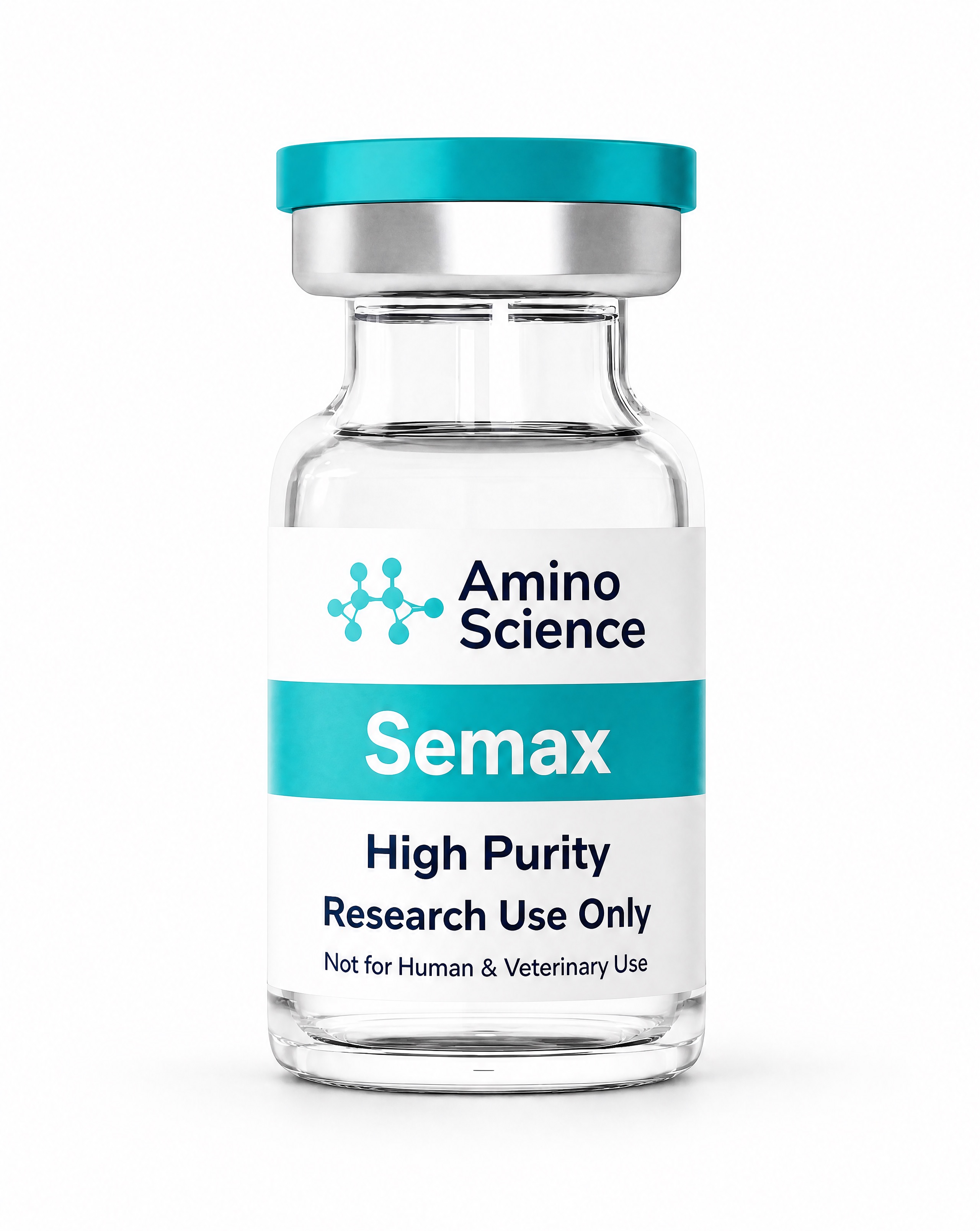
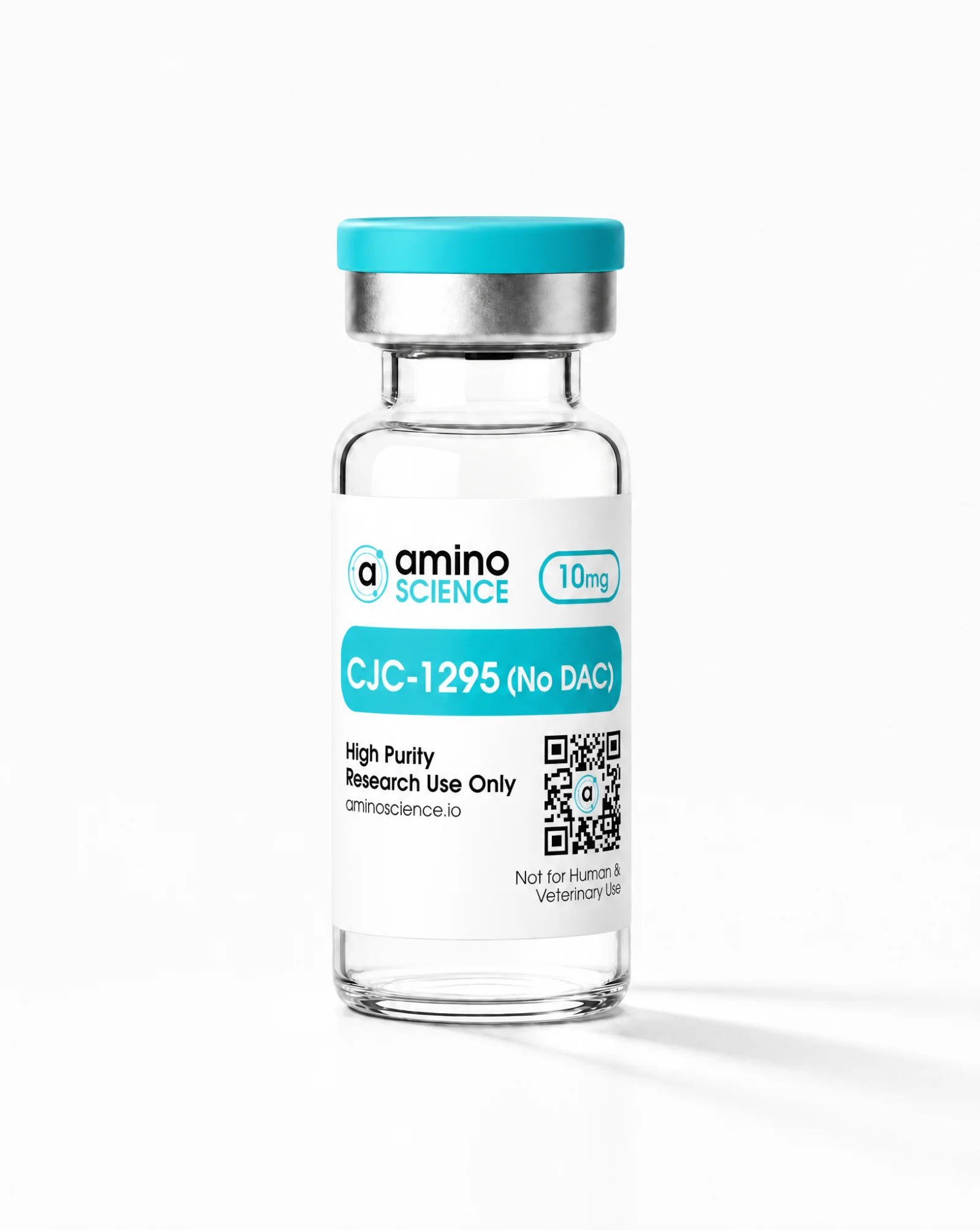
This listing supplies Semax as a 10 mg lyophilized (freeze-dried) research peptide intended strictly for in-vitro and preclinical laboratory work. Semax is a synthetic heptapeptide with the sequence Met-Glu-His-Phe-Pro-Gly-Pro, corresponding to the molecular formula C37H51N9O10S and CAS 80714-61-0. Structurally it is built on the ACTH(4-7) fragment (Met-Glu-His-Phe) extended at the C-terminus with a Pro-Gly-Pro tripeptide. That terminal Pro-Gly-Pro motif is the defining engineering feature in the research literature: the proline residues flanking the core sequence markedly increase the peptide's resistance to aminopeptidase and carboxypeptidase cleavage relative to the parent ACTH fragment, which is why Semax is frequently described as a stabilized, non-hormonal analog rather than a corticotropin mimic.
Because the sequence omits the residues responsible for the adrenocorticotropic activity of full-length ACTH, Semax is studied in laboratory settings as a peptide tool compound rather than as a hormone. The material offered here is a characterized reference peptide for controlled benchtop investigation, and all descriptions below concern the research substance itself — its documented study history, its analytical fingerprint, and standard handling of freeze-dried peptide reference material. Nothing here describes an outcome in humans or animals, and none of the information provided is medical advice.
What Has Been Studied in Preclinical Models
The published literature on Semax is predominantly rodent-model and in-vitro in nature, and much of it originates from neuropeptide and melanocortin-system research groups. The summaries below describe observations in laboratory systems only; they are hypothesis-generating, remain preliminary and ongoing, and do not establish any effect in people. Reported experimental lines of inquiry include:
- Neurotrophic-factor expression: cell-culture and rodent-brain studies examining concentration-dependent changes in BDNF- and NGF-related gene and protein expression under controlled conditions.
- Melanocortin-fragment pharmacology: work using Semax as a non-corticotropic ACTH(4-7) analog to probe melanocortin-associated signaling separately from the steroidogenic activity of the full hormone.
- Enzymatic stability comparisons: in-vitro assays contrasting the degradation of the Pro-Gly-Pro-stabilized heptapeptide with the unmodified ACTH(4-7) fragment in the presence of peptidases, used to characterize the structural basis of its slower in-vitro breakdown.
- Degradation-product research: studies of the C-terminal fragment Pro-Gly-Pro, which has itself been examined as a metabolite of interest in peptide-turnover models.
Research Context
These references describe experimental laboratory work only. They are not medical claims, are not evidence of safety or efficacy in humans or animals, and should not be interpreted as guidance for any use outside a controlled research environment. Observations in isolated cells or rodent models do not necessarily translate to other biological systems.
Analytical Characterization
For a short peptide of this kind, identity and purity verification is central to reproducible results because truncated sequences and residual synthesis byproducts can co-occur with the target. Research-grade Semax is typically assessed by reversed-phase high-performance liquid chromatography (RP-HPLC) to quantify chromatographic purity, reported as the percentage of total peak area; the chromatogram resolves the main heptapeptide peak from process-related impurities and deletion sequences. This product is characterized at a purity of ≥98%.
Identity is confirmed by mass spectrometry (commonly ESI-MS or MALDI-TOF), where the observed molecular mass is matched against the theoretical value calculated for the C37H51N9O10S composition, verifying that the material is the intended Met-Glu-His-Phe-Pro-Gly-Pro sequence rather than a truncated or modified analog. A lot-specific Certificate of Analysis (COA) documents these analyses, along with appearance and net peptide content. Because a lyophilized peptide vial also contains counter-ion (frequently acetate) and residual water, the net peptide mass can differ from the gross fill weight; reviewing the lot-matched COA before use lets researchers calculate accurate stock concentrations and supports traceability.
Laboratory Handling of the Lyophilized Material
The following describes conventional handling of lyophilized research peptides and is not instruction for human or animal use. As a freeze-dried powder, Semax is hygroscopic; sealed vials are typically allowed to equilibrate to room temperature before opening to minimize condensation, then reconstituted with an appropriate research-grade solvent using standard sterile laboratory technique. Aliquoting reconstituted stock into single-use portions limits the freeze-thaw cycles that can degrade peptide integrity. Detailed temperature and stability windows for lyophilized, reconstituted, and working solutions appear in the storage table elsewhere on this page, and handling should follow standard institutional chemical-safety practice.