Amino Science Labs sells research peptides exclusively to qualified researchers and laboratories for in vitro and laboratory use. Please confirm before continuing.
By proceeding you affirm the statements above are true. Products are not for human or veterinary use, not for use in diagnostic procedures, and have not been evaluated by the U.S. Food and Drug Administration. Full disclaimer.
An educational, research-framed overview of the copper-binding tripeptide GHK-Cu — its chemistry, preclinical study history, and standard laboratory handling.
June 7, 2026·7 min read
What GHK-Cu Is
GHK-Cu is the copper(II) complex of the tripeptide glycyl-L-histidyl-L-lysine (GHK), a small three-amino-acid sequence first isolated from human plasma in the 1970s. In its native form the peptide binds a single copper ion with high affinity, producing the characteristic blue-tinted complex that laboratories refer to as a copper peptide. Because both the peptide backbone and its bound metal ion contribute to the molecule's chemistry, GHK-Cu is studied as a coordinated metallopeptide rather than as a simple linear peptide.
GHK occurs naturally and its concentration in biological fluids has been reported in the literature to change with age, an observation that has made it a recurring subject in the peptide and matrix-biology research literature. This article summarizes what has been examined in laboratory and preclinical settings and is intended purely as an educational, encyclopedic overview for researchers evaluating reference material. It is not a description of outcomes in humans and is not medical advice.
Research Background
Interest in GHK dates to work identifying it as a plasma factor that was reported to influence the behavior of cells in culture. Subsequent decades of in-vitro and animal studies positioned the tripeptide, and its copper complex, as a model compound for investigating copper transport, extracellular-matrix turnover, and cellular signaling in research settings. The copper-binding motif of GHK is frequently compared in the literature to the copper-coordination chemistry found in serum albumin, and this comparison underpins much of the mechanistic curiosity around the molecule among researchers.
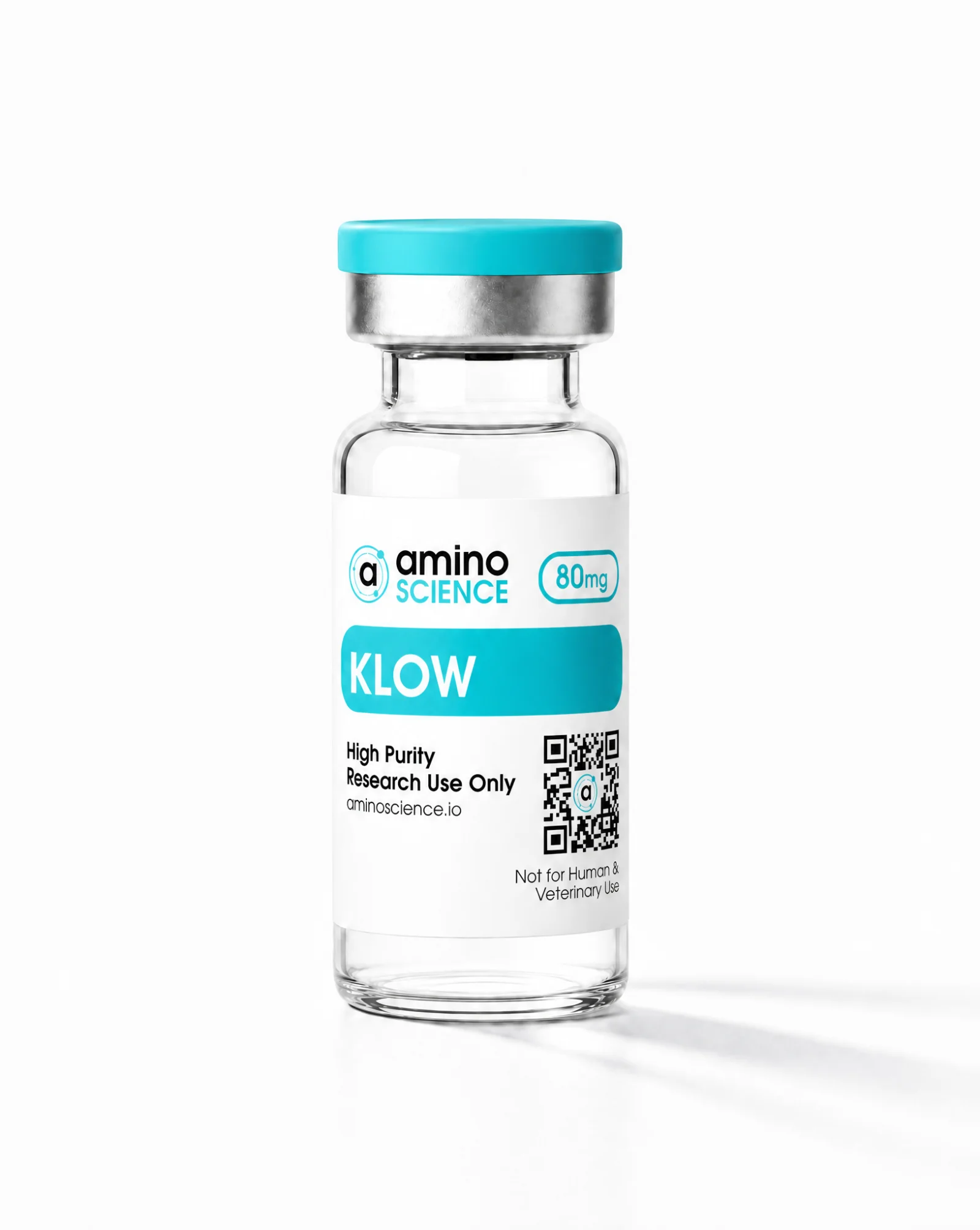
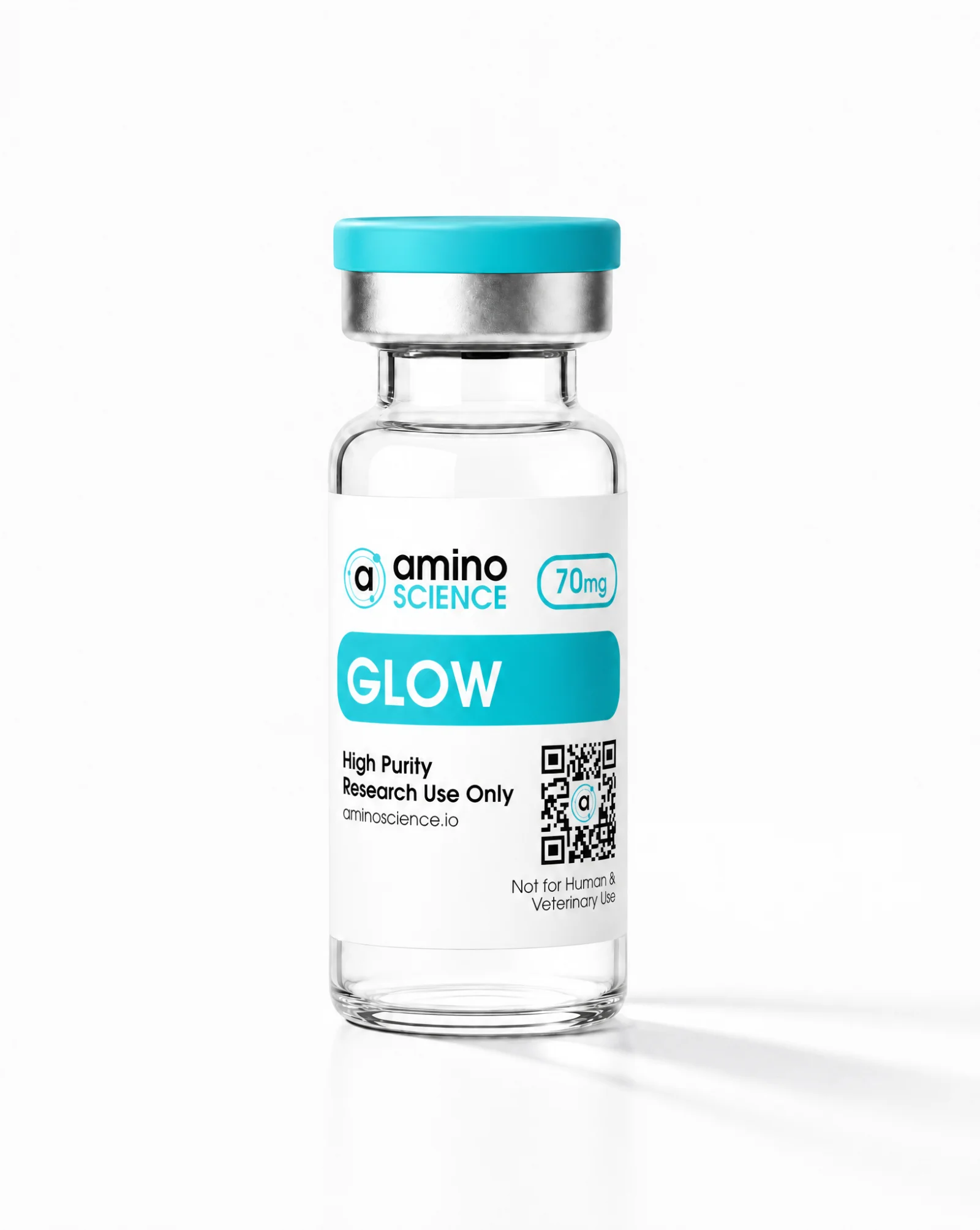
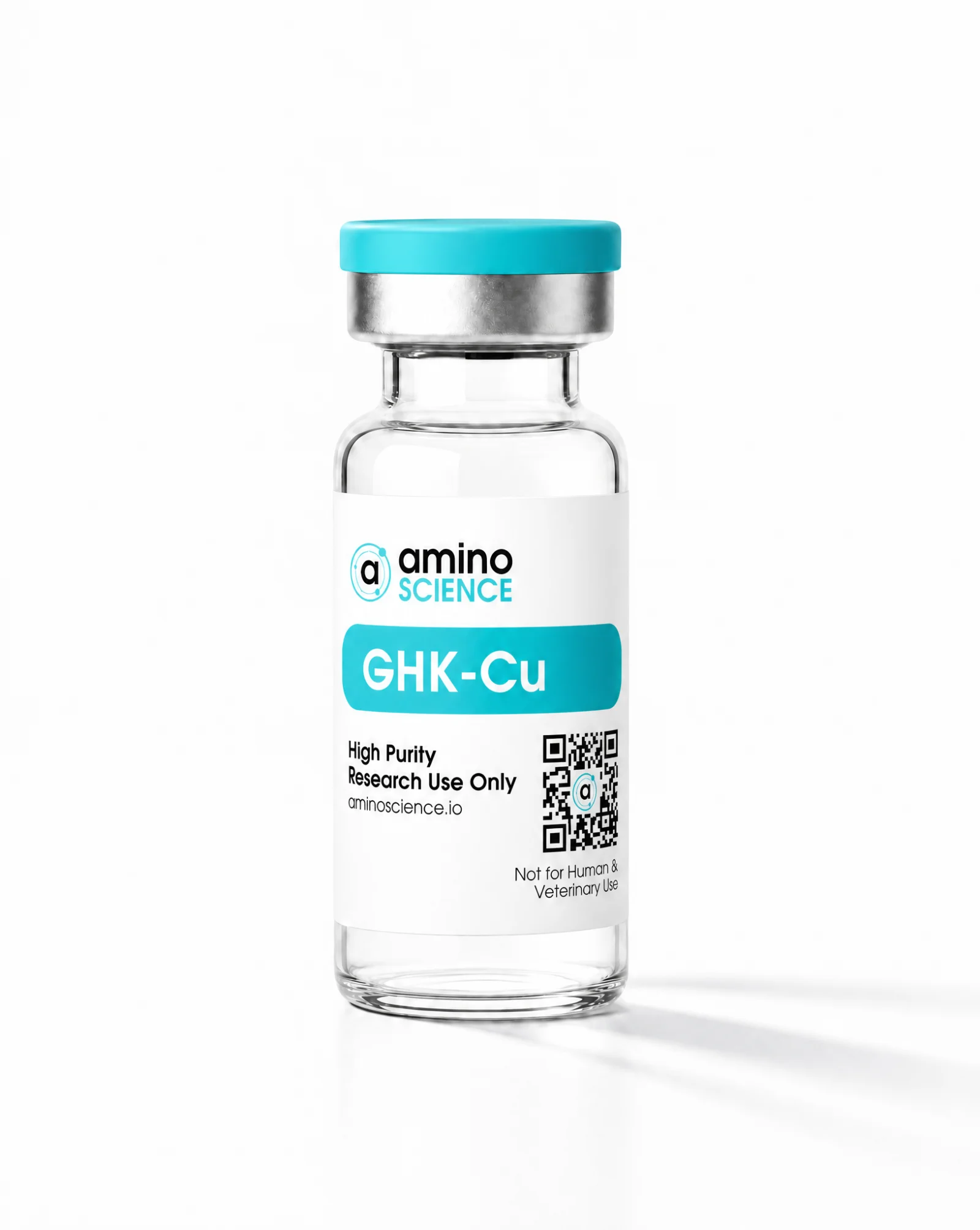
In the research-supply context, GHK-Cu is one of the more extensively characterized copper peptides, which is part of why it appears both as a standalone reference compound and as a component of multi-peptide research blends. On this supplier's catalog, GHK-Cu is offered as an isolated lyophilized peptide for laboratory use, while combination research materials such as the Glow Blend and the Klow blend pair copper-peptide chemistry with other sequences for laboratories studying matrix and skin-model systems. Blend formulations are used in research so that interactions between combined peptides can be examined under controlled in-vitro conditions.
Mechanism at a Laboratory Level
At a molecular level, the defining feature of GHK-Cu is its copper coordination. The histidine imidazole nitrogen, the terminal amine, and adjacent backbone atoms form a chelation site that holds copper(II) in a stable but exchangeable configuration. This coordination chemistry is the basis for the hypothesis, explored in preclinical models, that GHK may act partly as a carrier or shuttle for copper, delivering the ion to copper-dependent enzymes and copper-binding proteins under experimental conditions.
Beyond metal transport, cell-culture studies have reported that GHK and GHK-Cu can modulate the expression of genes associated with extracellular-matrix remodeling, including sequences linked to collagen and other structural proteins, as well as antioxidant-response elements. Transcriptomic screens in the published literature have described broad, concentration-dependent shifts in gene-expression patterns in cultured cells exposed to the peptide. Researchers generally frame these observations as signaling and gene-regulatory effects at the cellular level rather than as therapeutic actions, and the mechanistic picture remains an area of active investigation.
What Has Been Studied (Preclinical and In-Vitro)
The laboratory literature on GHK and GHK-Cu spans several categories of investigation. The following summarize commonly cited themes and are described strictly as research observations in models, not as effects in people:
Cell-culture matrix studies: fibroblast and skin-model systems have been used to examine GHK-Cu's influence on collagen-associated and matrix-remodeling gene expression in vitro.
Wound- and tissue-model research: animal and explant models have been used historically to study the tripeptide's association with tissue-repair signaling cascades in preclinical settings.
Antioxidant and gene-expression profiling: microarray and RNA-sequencing screens have characterized how cultured cells respond transcriptionally to the peptide.
Copper-chemistry research: physical and coordination-chemistry studies have quantified copper-binding affinity, complex stability, and redox behavior of the GHK-Cu complex.
Formulation and stability studies: analytical work has examined how the copper complex behaves in different buffer systems and formulation matrices used in benchtop research.
Across these categories the consistent caveat in the primary literature is that findings are preliminary and model-dependent. Results in a two-dimensional cell culture, a rodent model, or an isolated biochemical assay do not translate directly to any conclusion about human physiology, and much of the mechanistic work remains descriptive.
Notes on Purity, HPLC, and Certificate of Analysis
For reproducible research, the identity and purity of a copper peptide reference material matter as much as the sequence itself. GHK-Cu is typically assessed by reversed-phase high-performance liquid chromatography (HPLC) to quantify peptide purity, with mass spectrometry used to confirm molecular identity and the expected copper-complex mass. Because copper coordination affects chromatographic behavior, analytical methods for GHK-Cu are often noted separately from those used for the metal-free peptide.
A certificate of analysis (COA) accompanying a research batch generally reports the HPLC purity percentage, the mass-spectrometry identity confirmation, and sometimes water content or residual-solvent data for the lyophilized powder. Laboratories evaluating a supplier are encouraged to review the batch-specific COA rather than relying on a generic specification, since purity, counterion, and copper stoichiometry can vary between manufacturing lots. Retaining the COA alongside experimental records supports traceability and reproducibility.
Standard Laboratory Handling and Storage
The guidance below describes conventional handling of lyophilized research peptides in a laboratory and is not instruction for human or animal use. Lyophilized GHK-Cu is generally stored sealed and protected from light, humidity, and heat; long-term storage at freezer temperatures (commonly around minus 20 degrees Celsius or colder) is typical for peptide reference materials, with brief periods at refrigerated or room temperature tolerated during handling.
Reconstitution: lyophilized research material is dissolved for benchtop assays using an appropriate laboratory solvent such as bacteriostatic or sterile water; copper peptides can be sensitive to certain buffer components, so solvent choice is documented per protocol.
Aliquoting: reconstituted stock is often divided into single-use aliquots to minimize freeze-thaw cycles, which can degrade peptide integrity.
Light and metal sensitivity: because the complex contains a redox-active copper ion, exposure to light and oxidizing conditions is minimized during storage.
Labeling: aliquots are labeled with concentration, solvent, and date to maintain chain-of-custody for experimental records.
Suppliers commonly offer companion research consumables for these steps, such as a peptide-reconstitution kit and laboratory-grade bacteriostatic water, which help standardize solvent handling across experiments. Consistent handling reduces batch-to-batch variability that could otherwise confound in-vitro results.
Summary
GHK-Cu is a well-characterized copper-binding tripeptide complex with a long history in matrix-biology, copper-chemistry, and gene-expression research. Its coordination chemistry makes it a useful model compound for laboratories studying metallopeptides, while analytical characterization by HPLC and mass spectrometry supports reproducible use of reference material. The existing evidence base is preclinical and in-vitro, remains preliminary, and should be interpreted within the limits of the models in which it was generated. Nothing in this overview is medical advice or a health claim.
Research Use Only
All products and information referenced here are intended strictly for in-vitro laboratory and preclinical research purposes only. They are not drugs, foods, cosmetics, or dietary supplements, and are not for human or animal consumption, diagnosis, treatment, or prevention of any condition. Nothing above is medical advice, and no statement should be read as a health claim. The research summarized is preliminary and ongoing. Handling, storage, and any experimental work must be performed by qualified personnel in an appropriate laboratory setting in compliance with all applicable laws and institutional guidelines.
Frequently asked questions
What is GHK-Cu at a chemical level?
GHK-Cu is the copper(II) complex of the tripeptide glycyl-L-histidyl-L-lysine. The peptide chelates a single copper ion through its histidine and terminal-amine coordination sites, forming a stable metallopeptide that is studied as a coordinated copper carrier rather than as a plain linear peptide.
What has GHK-Cu been studied in within research settings?
In laboratory and preclinical settings it has been examined in cell-culture matrix-remodeling studies, transcriptomic and antioxidant gene-expression screens, tissue-repair signaling models, and copper coordination-chemistry work. All of these are model-based research observations, not demonstrated outcomes in humans, and the literature describes the findings as preliminary.
How is GHK-Cu purity verified?
Purity is typically assessed by reversed-phase HPLC and identity is confirmed by mass spectrometry, which verifies the expected copper-complex mass. A batch-specific certificate of analysis (COA) reports these values and should be reviewed per lot, since purity and copper stoichiometry can vary between manufacturing batches.
How is lyophilized GHK-Cu handled and stored in a laboratory?
Lyophilized material is generally kept sealed, dry, and protected from light, with long-term storage at freezer temperatures. For benchtop assays it is reconstituted in an appropriate laboratory solvent, aliquoted to limit freeze-thaw cycles, and labeled for traceability. This is standard handling of research material, not guidance for any human or animal use.
Why does GHK-Cu appear in research blends like Glow Blend and Klow?
Copper-peptide chemistry is a common component in multi-peptide research materials used to study matrix and skin-model systems. Blends let researchers examine how combined sequences behave together under controlled in-vitro conditions. As with the isolated peptide, blends are for laboratory research only.
For research use only. Not for human or veterinary use. This content is educational and summarizes laboratory research; it is not medical advice and makes no health claims.