Amino Science Labs sells research peptides exclusively to qualified researchers and laboratories for in vitro and laboratory use. Please confirm before continuing.
By proceeding you affirm the statements above are true. Products are not for human or veterinary use, not for use in diagnostic procedures, and have not been evaluated by the U.S. Food and Drug Administration. Full disclaimer.
A neutral, laboratory-focused summary of the 15-amino-acid peptide BPC-157: its sequence, proposed mechanisms, preclinical study landscape, and standard research handling.
June 1, 2026·6 min read
Research Use Only
This article is provided for educational and informational purposes only and describes laboratory and preclinical research. The compound discussed is a research chemical intended strictly for in-vitro and laboratory research use, and is NOT for human or animal consumption, diagnostic, or therapeutic use. Nothing here is medical advice or a claim of safety or efficacy. The research summarized is preliminary and ongoing; observations in cell cultures or animal models do not establish outcomes in humans. Handling of any research material should follow applicable institutional and regulatory safety requirements.
What Is BPC-157?
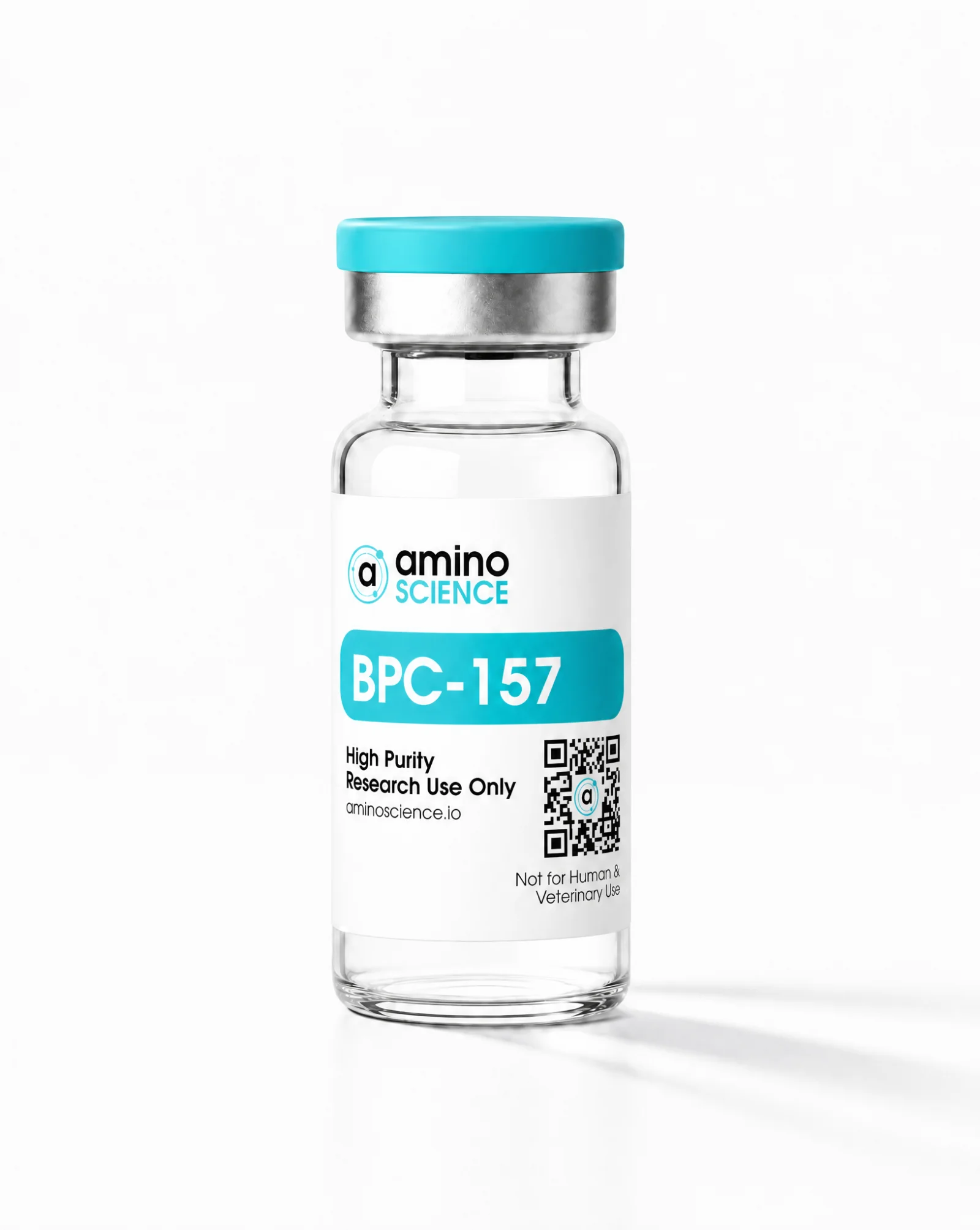
BPC-157 is a synthetic peptide composed of a 15-amino-acid sequence (Gly-Glu-Pro-Pro-Pro-Gly-Lys-Pro-Ala-Asp-Asp-Ala-Gly-Leu-Val). Its name derives from "Body Protection Compound," a designation used in the early literature describing a partial sequence attributed to a protein reportedly identified in gastric juice. In research settings it is often abbreviated BPC-157 and is sometimes described with the prefix "pentadecapeptide," a reference to its 15-residue length. It is supplied to laboratories as a lyophilized (freeze-dried) white powder for reconstitution and in-vitro or preclinical experimental work.
BPC-157 has attracted sustained attention in the peptide-research community because it is a relatively short, stable sequence that has been used as a model compound in a range of preclinical investigations. This overview summarizes how the peptide has been characterized in the scientific literature, the mechanisms proposed at a laboratory level, and standard practices for handling research-grade material. It is written for an audience of researchers and is not a guide to any human or animal application.
Research Background
Interest in BPC-157 dates to studies published in the 1990s and 2000s, largely originating from academic groups investigating gastrointestinal peptides in rodent models. Across this body of work the peptide has been used as an experimental probe in models of tissue organization, angiogenesis (the formation of new blood vessels), and cellular migration. It is important to frame this literature accurately: the great majority of published reports involve isolated cells (in vitro) or animal models (in vivo, primarily rodents), and the findings describe experimental observations under controlled laboratory conditions rather than validated outcomes in humans.
To date, robust, large-scale controlled human clinical trials on BPC-157 are limited, and the compound has not been established as a therapeutic agent by major regulatory bodies. Researchers reviewing the literature generally characterize the evidence as preliminary and hypothesis-generating. Because the peptide is frequently referenced online, careful readers should distinguish between peer-reviewed preclinical data and unverified claims. This article confines itself to what has been studied in laboratory and animal-model contexts.
Mechanism at a Laboratory Level
The mechanisms proposed for BPC-157 in preclinical literature are still being characterized, and no single, fully validated pathway has been established. Several lines of investigation recur across published studies. Understanding these is useful for researchers designing in-vitro experiments.
Angiogenic signaling: Multiple studies have examined the peptide in relation to vascular endothelial growth factor (VEGF) pathways and endothelial cell behavior, using assays such as endothelial tube-formation and cell-migration models.
Nitric oxide (NO) system: Some rodent-model work has explored interactions with the nitric oxide pathway, including studies that co-administer NO-synthase inhibitors or NO substrates to probe pathway involvement.
Growth-factor and receptor pathways: Preclinical reports have investigated potential modulation of growth-factor receptor expression, including references to the FAK-paxillin signaling cascade in cell-migration assays.
Cytoprotection markers: In gastrointestinal rodent models, researchers have measured markers associated with mucosal integrity as experimental endpoints.
These mechanistic descriptions are drawn from experimental systems and should be read as proposed pathways under active investigation, not as confirmed physiological effects. Reproducibility across independent laboratories remains an important consideration when interpreting this literature.
What Has Been Studied (Preclinical / In-Vitro)
The preclinical literature spans several experimental categories. Reported study designs include rodent models of gastrointestinal tissue injury, models examining tendon- and ligament-derived fibroblast behavior in culture, and investigations of vascular and connective-tissue cell lines. In-vitro studies have used cultured fibroblasts and endothelial cells to observe migration and proliferation endpoints under controlled conditions.
Researchers have also examined the peptide's stability and behavior in various buffer systems, which is relevant to assay design. Because experimental parameters vary widely between reports — cell type, concentration ranges, model species, and endpoints — cross-study comparison is difficult, and any generalization beyond the specific system studied is not supported by the current data. Investigators typically emphasize that observations in rodents or isolated cells do not translate directly to other biological systems.
Interpretation note
The endpoints described above are experimental measurements from laboratory and animal-model systems. They are not evidence of any effect in humans, and nothing in this section should be read as a health outcome or a claim about efficacy or safety.
Purity, HPLC, and Certificate of Analysis (COA)
For any peptide used in research, analytical characterization is central to reproducible results. Research-grade BPC-157 is typically assessed by high-performance liquid chromatography (HPLC), most commonly reversed-phase HPLC, to quantify chromatographic purity — often reported as a percentage of the main peak. Mass spectrometry (commonly ESI-MS or MALDI-TOF) is used to confirm that the measured molecular weight matches the expected mass of the sequence, providing identity verification alongside the purity figure.
A Certificate of Analysis (COA) accompanying a research lot documents these analyses. Researchers evaluating material generally review the COA for: the HPLC purity value and chromatogram, the mass-spectrometry identity confirmation, the reported net peptide content, and lot-specific identifiers. Reviewing a current, lot-matched COA before use is standard practice, since purity and counter-ion or salt content can affect the actual amount of peptide present in a given mass of powder and therefore influence experimental concentrations.
Standard Laboratory Handling and Storage
The following notes describe conventional handling of lyophilized research peptides in a laboratory environment. They are provided for material-handling context only and do not imply any human or animal use.
Lyophilized storage: Freeze-dried peptide is generally kept sealed and protected from light and moisture. Long-term storage of the dry powder is commonly maintained at -20 degrees C or lower; short-term storage may be at refrigerated temperatures per the supplier's COA guidance.
Reconstitution: When an experiment requires a solution, lyophilized peptide is typically brought to room temperature before opening to reduce condensation, then dissolved in an appropriate solvent. Bacteriostatic or sterile water is a common laboratory diluent for aqueous work; some hydrophobic peptides require a small amount of a compatible co-solvent.
Aliquoting: To avoid repeated freeze-thaw cycles, reconstituted solutions are often divided into single-use aliquots before freezing, since repeated cycling can degrade peptide integrity.
Reconstituted stability: Peptide solutions are generally less stable than the lyophilized form and are typically stored cold and used within a limited window; researchers confirm stability empirically for their specific buffer and conditions.
Documentation: Recording lot number, reconstitution date, diluent, and concentration supports reproducibility and traceability across experiments.
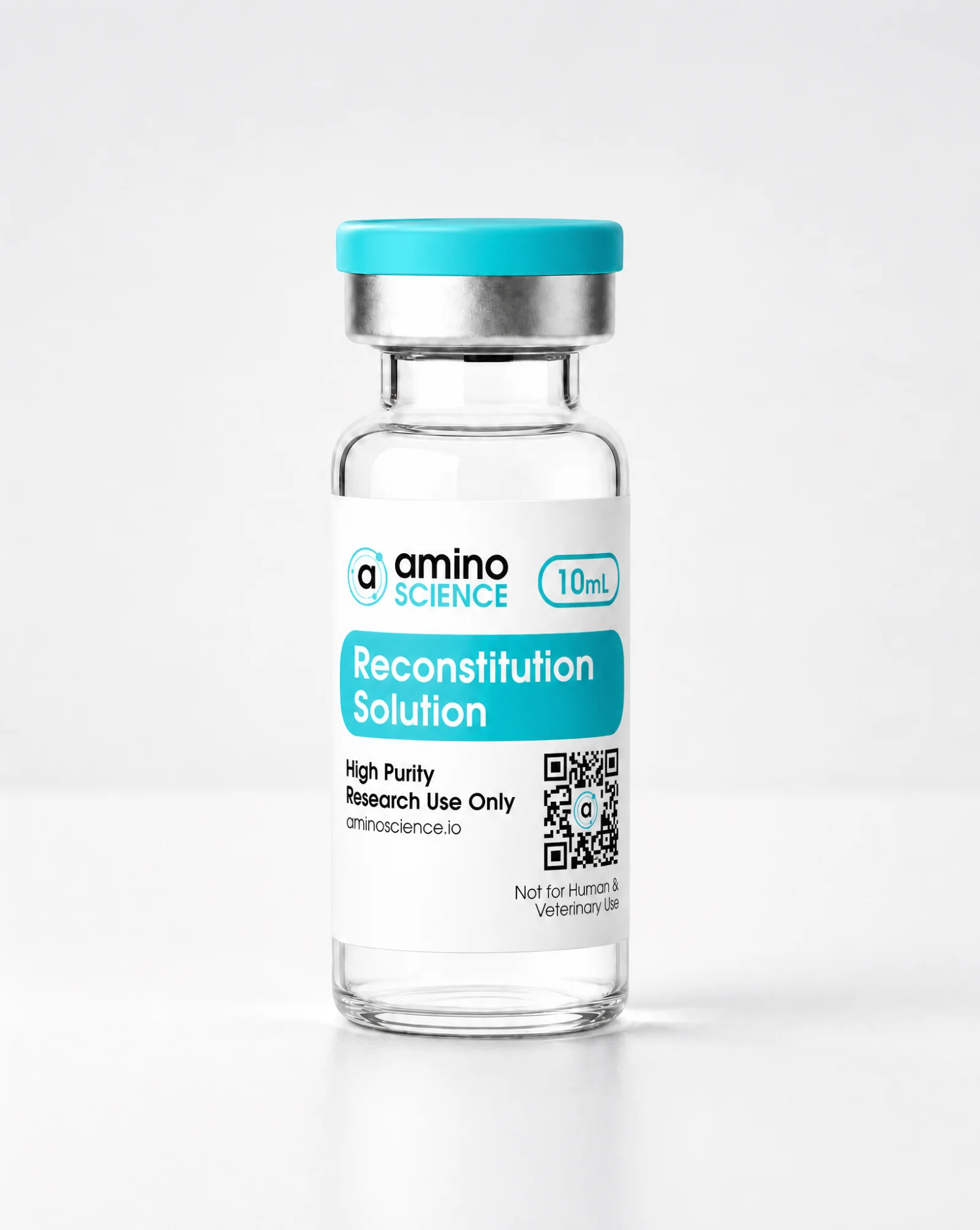
Bacteriostatic water and reconstitution supplies are handled as general laboratory consumables. As with all research chemicals, appropriate personal protective equipment and institutional safety protocols apply.
Summary
BPC-157 is a 15-amino-acid synthetic peptide that has served as an experimental compound in a range of preclinical and in-vitro studies, with proposed mechanisms centered on angiogenic, nitric-oxide, and growth-factor-related pathways that remain under active investigation. The available evidence is largely from rodent models and cell culture and is best regarded as preliminary. Analytical verification via HPLC and mass spectrometry, review of a lot-matched COA, and standard cold-chain handling of lyophilized material are the practical considerations most relevant to researchers working with this compound.
Frequently asked questions
What is BPC-157 in research terms?
BPC-157 is a synthetic 15-amino-acid peptide (a pentadecapeptide) supplied to laboratories as a lyophilized powder for in-vitro and preclinical research. It has been used as an experimental compound in cell-culture and rodent-model studies. It is a research chemical for laboratory use only, not a therapeutic product.
What mechanisms have researchers proposed for BPC-157?
Preclinical literature most commonly discusses proposed involvement of angiogenic (VEGF-related) signaling, the nitric oxide pathway, and growth-factor receptor and cell-migration pathways such as FAK-paxillin. These are pathways under investigation in experimental systems, not confirmed physiological effects, and no single mechanism has been fully validated.
Has BPC-157 been studied in humans?
The published evidence is predominantly from in-vitro assays and rodent models. Robust, large-scale controlled human clinical trials are limited, and the compound is not established as a therapeutic agent by major regulatory bodies. The literature is generally described as preliminary and hypothesis-generating.
How is research-grade BPC-157 verified for purity?
Purity is typically assessed by reversed-phase HPLC and reported as a percentage of the main chromatographic peak, with identity confirmed by mass spectrometry (ESI-MS or MALDI-TOF). A lot-specific Certificate of Analysis (COA) documents these results along with net peptide content and lot identifiers.
How is lyophilized peptide typically stored in a laboratory?
Freeze-dried peptide is generally kept sealed, dry, and protected from light, often at -20 degrees C or colder for long-term storage. Once reconstituted, solutions are usually aliquoted to avoid repeated freeze-thaw cycles, stored cold, and used within a limited window confirmed for the specific buffer conditions. This describes laboratory material handling only.
For research use only. Not for human or veterinary use. This content is educational and summarizes laboratory research; it is not medical advice and makes no health claims.